
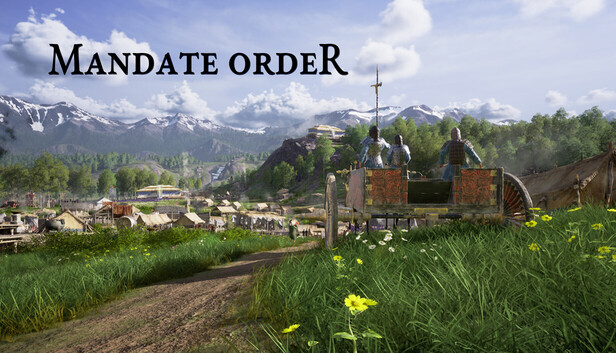
In most city-building strategy games, defeat is easy to spot: a wall crumbles, your stores are raided, or your forces collapse under pressure. It is tempting to look at a breach in your defenses and assume the battle was simply lost on the field. However, seasoned strategy players know that the true defeat often happens long before the first enemy soldier arrives at your gates.
The developers of Mandate Order are aiming to change how we view the relationship between city management and military conflict. Instead of treating war as a separate, disconnected event that pauses your economic progress, the game integrates survival into the very infrastructure of your settlement. Success or failure should not be determined by a simple resource total on your UI; it should be defined by whether your logistics chain, labor force, and supply lines are prepared to handle the strain when crisis strikes.
Mandate Order introduces a rigorous approach to recruitment that emphasizes readiness over raw possession. You cannot field an army simply by having enough gold or weapons in your global stockpile. To mobilize a levy, your equipment must physically reside in an armory. If your production is complete but your weapons are still scattered across the city or stuck in transit, you are effectively unarmed during a crisis. This shift forces players to treat logistics as a core defensive pillar. You are no longer just managing production numbers; you are managing the physical flow of goods and the labor required to move them.
Recruitment also demands a deep understanding of your city's labor needs. When you call for a levy, you are not pulling soldiers from a static pool; you are pulling active workers from their posts. Mandate Order asks players to weigh the cost of speed against the cost of economic disruption. If you draft workers from your food production or vital supply lines, your city remains vulnerable in other ways. The game forces a constant, difficult trade-off: do you prioritize the immediate defense of your gates at the risk of long-term economic instability, or do you accept a slower mobilization to keep your core systems running?
This interconnected philosophy extends to the game's invasion and bandit systems. Rather than relying on predictable attack waves that you can memorize and prepare for in a vacuum, Mandate Order forces you to make complex choices regarding resources. Bandits may demand tribute, forcing you to choose between paying for time or fighting early. Handing over supplies might buy you a window to fortify your defenses, but it depletes your reserves and leaves you vulnerable if your logistics are not properly optimized. If you ignore these threats, the bandits will target your most valuable facilities, creating a cascading failure that is entirely a result of your past planning.
Ultimately, Mandate Order suggests that a city's defense is merely the moment where your previous management decisions are put to the test. Whether you built a sprawling, efficient metropolis or a fragile state that crumbles under pressure, the outcome was decided by the logistics, labor, and development choices you made in the quiet moments before the war. The game launches into Early Access on Steam and the Epic Games Store on August 12, 2026, offering players a chance to see if their governing strategy can truly survive the test of time and conflict.